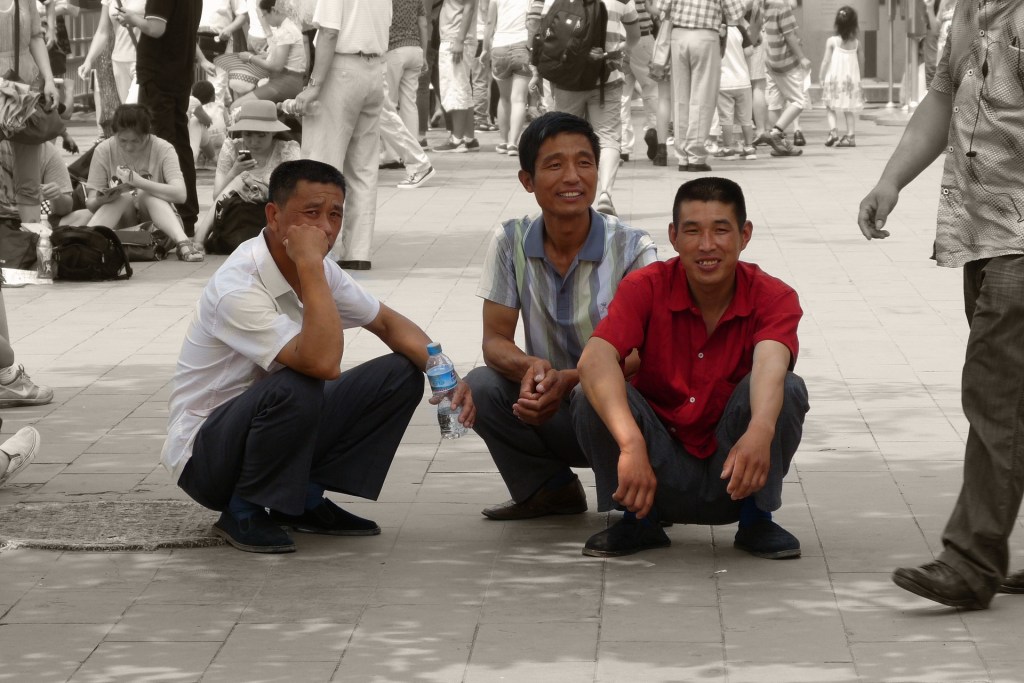
If I had to choose one stretch we should all be doing every day, it would be the squat with feet placed flat on the floor. It is one of the most fundamental human movements. I call it a stretch because if most people in the western world attempted a squat, they would feel a stretch in the hips, adductors, ankles and calves, just before they fall over; that’s if they are not holding onto something. In reality, this should not be a stretch; it should be something we can do with ease, just like we see people doing in some parts of Africa and Asia. Squatting is a healthy and natural way to go to the toilet. We have a U shaped muscle called the Puborectalis which wraps around the rectum. Under normal circumstance, this muscle is contracted, maintaining a bend in the rectum and contributing to stool continence. When we sit, as we do on the toilet, this muscle becomes relaxed a little, putting less of an angle and stranglehold on the rectum. This angle is just enough to allow us to do our business. The only time this sling-type muscle completely lengthens, allowing the rectum to adopt a less acute angle, is when we go into a deep squat. There are purpose made squatting stools on the market which wrap around the toilet. This might be something to consider for people who suffer from constipation. If constipation is a problem, a high fibre diet would be my first port of call.
The invention of chairs has stopped us from squatting. Young children manage it up to a point. The great thing about squatting is how it allows gravity to stretch our adductor and hamstring muscles, opens up the hips, strengthens the leg, glutes and core muscles and places the pelvis into a natural healthy position which takes the weight off the lower back. Loosening up the hips alone will give the lower back freedom to move. We in the west are seizing up and back problems are all too common. Sitting in chairs for long periods without daily stretching (especially squatting) is a recipe for lower back and hip pain. The irony is, we invent things to make our lives more comfortable, but in truth, they end up causing us discomfort.
 Ben Marfleet Massage Therapy