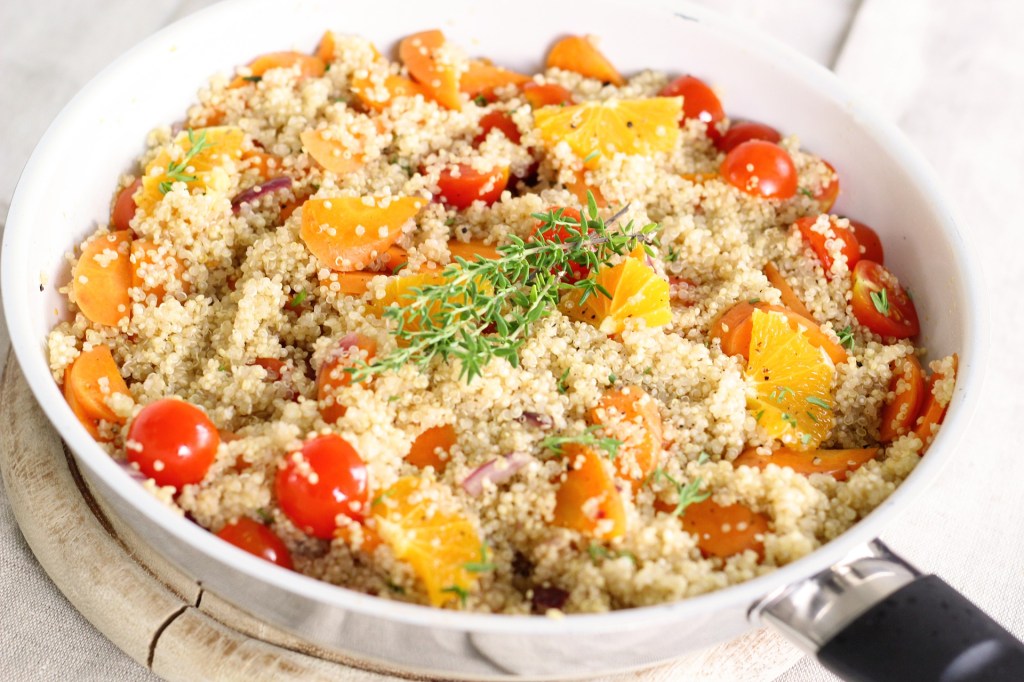
Quinoa, pronounced KEEN-wah is my favourite go-to food right now. It certainly packs a nutritional punch with its excellent source of magnesium, phosphorus, manganese and folate. It is also a great source of fibre, iron, copper, thiamin and B6, and if that wasn’t enough it is also one of the few plant foods that is a complete protein. This means it contains all nine essential amino acids our bodies require. It’s no real surprise then that this nutritional powerhouse was referred to as the mother of all grains and considered a sacred crop by the Incas. It was first cultivated 5000 years ago in the mountains of Bolivia, Chile and Peru. In 1532 the Spanish conquest of the Inca empire nearly saw an end to this amazing food. All the quinoa fields were destroyed by the instruction of Francisco Pizarro in his attempt to wipe out Inca culture. I can not help thinking, that if he ate the quinoa instead of burning it, he might have been more successful in his first two failed expeditions to Peru. Luckily for us, a few pockets of the crop survived in the high mountains and then during the 1970s, quinoa was introduced into the modern world. It is often referred to as a grain but it is actually a seed. A seed that may play a part in helping to end world hunger and has been dubbed a super crop by the united nations because it can grow in poor soils without irrigation. It is relatively quick to cook (only 15min), but you must wash it thoroughly before cooking because it contains saponins. Saponins are a bitter soapy substance that protects the quinoa plant from fungal and insect attack. These saponins are also an irritant to our digestive system. It goes alongside any food, hot or cold, in a casserole or on its own with a little seasoning. I consider all plants to be superfoods but with quinoa’s history and nutritional value, it certainly gets an extra super thumbs up from me.
 Ben Marfleet Massage Therapy