This is a lifestyle blog. I look forward to sharing with you lots of good health hacks, including self massage, stretching, recipes, brands, nutrition, exercise and much more. If you would like to follow, please hit the subsrcibe button below.
You can’t go back and change the beginning, but you can start where you are and change the ending.
If the sun is out in September, I am also out, soaking up the last of the year’s source of vitamin D supply the way nature intended. In three to four weeks, the UK’s UVB radiation will not be strong enough to supply us with this all-important vitamin. I say vitamin but it is actually a hormone. For some unknown reason, we refer to it as a vitamin. I suppose it does simplify things. Vitamin D helps regulate the amount of calcium and phosphate in the body. It also plays a key role in boosting our immune system, which I think right now is a very good idea. If you choose to eat meat as in animals rather than the origin of the word mete which incidentally comes from old English meaning food in general then you might be getting some Vit D through your food. This is providing the animal has been exposed to sufficient sunlight. Animals that are reared indoors will be supplemented with Vit D so you may be consuming a second-hand supplement; but how much is anyone’s guess. One in five people in the UK is said to be deficient. Unlike America, the Uk doesn’t fortify milk, so dairy is not considered a source of Vit D. Some plant milk’s and cereals are fortified. Tanning beds are a way to boost Vit D but not something I would choose because of the skin cancer risks. I choose a Vit D3 supplement which I take from November until the end of May. Even though I won’t be getting Vit-D from the sunlight during October, it is fat-soluble and can be stored for a month or two in the body, hence the November start. The NHS recommend 400iu (international units) a day. Some studies show the optimum level for adults should be a daily intake of 2000iu. Too much Vit-D can be dangerous. The NHS advises not to take more than 4000iu a day. If you choose to supplement you have a choice of D2 or D3. D3 is said to be the better more effective choice. D3 is produced either from the lanolin in sheep’s wool or from lichen. I choose the latter. In the meantime, the sun has still got his hat on.
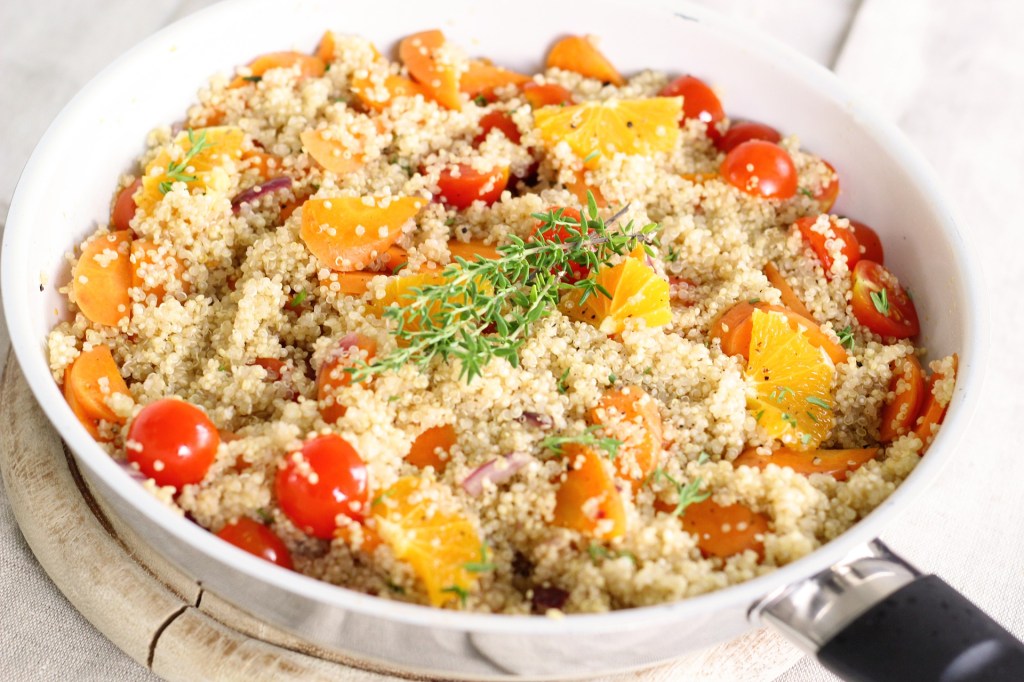
Quinoa, pronounced KEEN-wah is my favourite go-to food right now. It certainly packs a nutritional punch with its excellent source of magnesium, phosphorus, manganese and folate. It is also a great source of fibre, iron, copper, thiamin and B6, and if that wasn’t enough it is also one of the few plant foods that is a complete protein. This means it contains all nine essential amino acids our bodies require. It’s no real surprise then that this nutritional powerhouse was referred to as the mother of all grains and considered a sacred crop by the Incas. It was first cultivated 5000 years ago in the mountains of Bolivia, Chile and Peru. In 1532 the Spanish conquest of the Inca empire nearly saw an end to this amazing food. All the quinoa fields were destroyed by the instruction of Francisco Pizarro in his attempt to wipe out Inca culture. I can not help thinking, that if he ate the quinoa instead of burning it, he might have been more successful in his first two failed expeditions to Peru. Luckily for us, a few pockets of the crop survived in the high mountains and then during the 1970s, quinoa was introduced into the modern world. It is often referred to as a grain but it is actually a seed. A seed that may play a part in helping to end world hunger and has been dubbed a super crop by the united nations because it can grow in poor soils without irrigation. It is relatively quick to cook (only 15min), but you must wash it thoroughly before cooking because it contains saponins. Saponins are a bitter soapy substance that protects the quinoa plant from fungal and insect attack. These saponins are also an irritant to our digestive system. It goes alongside any food, hot or cold, in a casserole or on its own with a little seasoning. I consider all plants to be superfoods but with quinoa’s history and nutritional value, it certainly gets an extra super thumbs up from me.
If I had to choose one stretch we should all be doing every day, it would be the squat with feet placed flat on the floor. It is one of the most fundamental human movements. I call it a stretch because if most people in the western world attempted a squat, they would feel a stretch in the hips, adductors, ankles and calves, just before they fall over; that’s if they are not holding onto something. In reality, this should not be a stretch; it should be something we can do with ease, just like we see people doing in some parts of Africa and Asia. Squatting is a healthy and natural way to go to the toilet. We have a U shaped muscle called the Puborectalis which wraps around the rectum. Under normal circumstance, this muscle is contracted, maintaining a bend in the rectum and contributing to stool continence. When we sit, as we do on the toilet, this muscle becomes relaxed a little, putting less of an angle and stranglehold on the rectum. This angle is just enough to allow us to do our business. The only time this sling-type muscle completely lengthens, allowing the rectum to adopt a less acute angle, is when we go into a deep squat. There are purpose made squatting stools on the market which wrap around the toilet. This might be something to consider for people who suffer from constipation. If constipation is a problem, a high fibre diet would be my first port of call. The invention of chairs has stopped us from squatting. Young children manage it up to a point. The great thing about squatting is how it allows gravity to stretch our adductor and hamstring muscles, opens up the hips, strengthens the leg, glutes and core muscles and places the pelvis into a natural healthy position which takes the weight off the lower back. Loosening up the hips alone will give the lower back freedom to move. We in the west are seizing up and back problems are all too common. Sitting in chairs for long periods without daily stretching (especially squatting) is a recipe for lower back and hip pain. The irony is, we invent things to make our lives more comfortable, but in truth, they end up causing us discomfort.
If like me, you prefer not to drink out of containers which use bisphenol A (BPA) in their making, then you might want to reduce your BPA intake in other ways too. One way to reduce the absorption of this endocrine-disrupting chemical is to not handle thermal paper like used in till receipts if you have hand sanitiser, lotions, soap or suncream on your hands. These products often contain chemicals that enhance skin penetration. If we hold a till receipt in our hands for 60 seconds we only absorb 3 micrograms of BPA. In contrast, if we pre-wet our hands with sanitiser we can absorb up to 300 micrograms in just a few seconds. If your job involves handling till receipts then you might want to consider wearing disposable gloves; just not vinyl gloves, as these too are often made using BPA. There are other materials used in the making of disposable gloves. Some are safe and some not so. I will explain the pros and cons of different disposable glove materials in a future blog. Un-till next time, stay healthy.
Vitamin C, as we all know is an immune bootsing, virus fighting nutrient. Whilst Vit C will not stop you from getting a virus, loading up on it may help reduce the severity of its symptoms. If I were to ask most people to name a food high in Vit C, the popular answer would be oranges. Whilst oranges do have Vit C, like many other health claims, it is generally down to marketing. There are many foods that have higher levels of Vit C than oranges. A medium sized orange has 69.7mg of Vit C. Chilli peppers (half cup) 107.8mg. One cup bell pepper 190mg three times more than an orange. One cup Kale 80.4 mg. Broccoli 132mg. One cup Papaya 88.3mg. One cup Strawberries 84.7mg. Small head cauliflower 127.7mg. Brussel sprouts 74.8mg. pineapple 78.9mg. kiwi x 2 137.2mg. Mango 122.3mg. Amla (indian gooseberry) has twenty times more Vit C than an orange. You can buy Amla powder online but be warned, it tastes disgusting which is why you can also get it in capsule form. Also worth noting; vit C is water soluble so you will lose or lessen this nutrient through cooking, so its best to steam your veg or eat your peppers raw. As well as giving your immune system a boost Vit C also aids the absorption of iron. Taking supplements is not the healthy option. It is always best to get your nutrients through whole foods, the way nature intended.
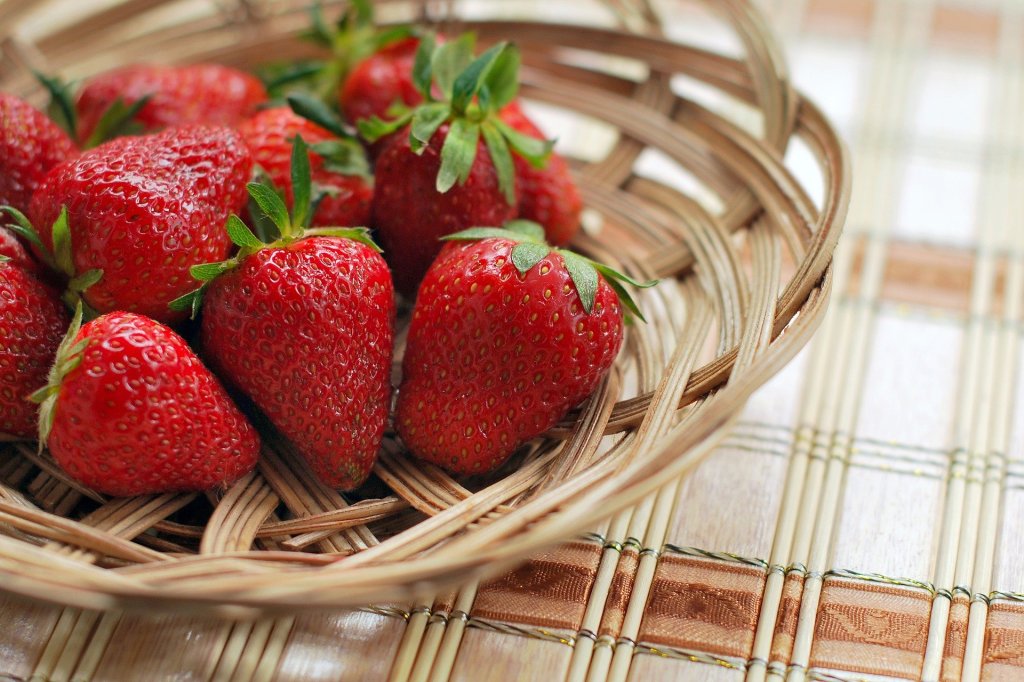
Its strawberry season. What better way to boost our immune system.


 Ben Marfleet Massage Therapy